
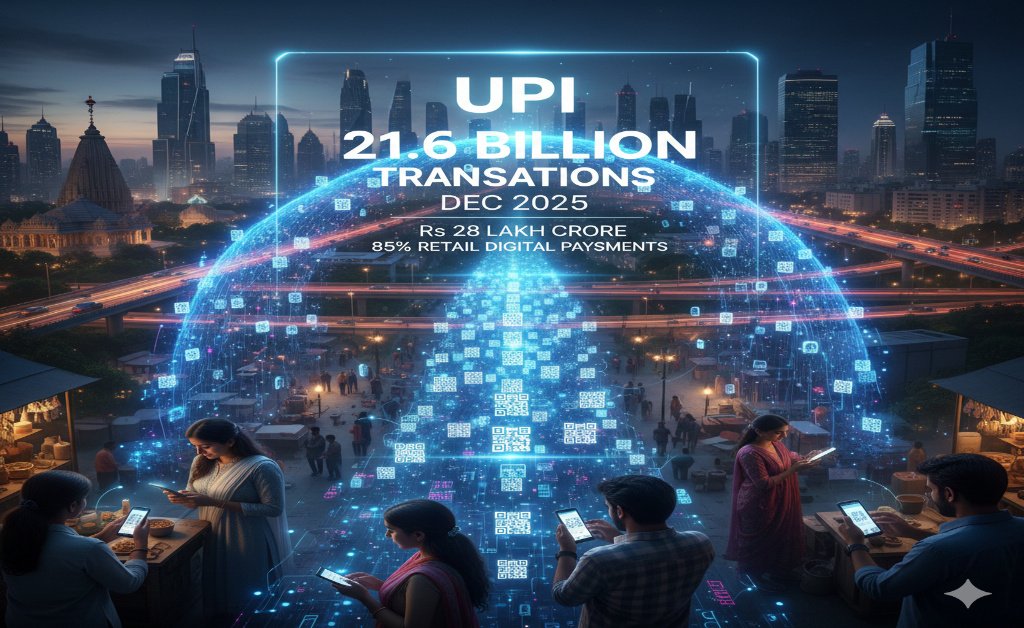
The extent to which UPI has spread its dominance can now be appreciated not only in terms of the volume but also in terms of value. UPI transaction volumes in the last quarter of 2025 were up by 34% year-on-year and the total value of monthly transactions reached around Rs 28 lakh crore. The increase in volume is heavily contributed by the micro-transactions; the average ticket size has gone down to nearly Rs 1,293, which means that UPI is now the major payment method for daily, small-value purchases such as groceries and street-side vendors. Presently, UPI is believed to have a share of around 85% in the total retail digital payments made in India, thus confirming its status as the mainstay of the country’s financial system.

Deep Digital Shift in Bharat
The turning point of this landmark is without a doubt the Deep Digital Shift going past the metropolitan cities. The numbers from the SBI Research report indicate that while the big cities are not growing any more, the digital adoption in semi-urban and rural areas is really exploding. With more than 709 million active QR codes across the nation, the “scan-and-pay” method has in a way brought together the neighborhood kirana store with the worldwide digital economy. One of the contributing factors of this trend is the “JAM” trinity Jan Dhan accounts, Aadhaar identity, and Mobile connectivity which has actually transformed millions of unbanked individuals into the formal financial system.
Global Expansion and Future Outlook
The Indian payment system’s triumph is a global phenomenon now. The NPCI’s Global Expansion plan has led to UPI being activated in eight countries among which are France, UAE, Singapore, and Sri Lanka. By early 2026, the government will double its efforts to penetrate East Asia. The coming years will see the focus shift to “Credit-on-UPI” and the assimilation of AI-driven dialog payment. With a forecast of reaching 1 billion daily transactions by 2027, UPI is becoming a worldwide standard for instant, real-time cross-border settlements.