
Many people who have credit cards wonder what would happen if they used it to pay for unexpected things or to buy very expensive items and then went over their credit limit. Although most banks allow for such transactions beyond the agreed-upon credit cap, this is not an entirely free flexibility. According to financial advisers, the over-limit facility appears safe, but it is controlled by very serious rules that may have adverse effects on a borrower’s overall credit rating.
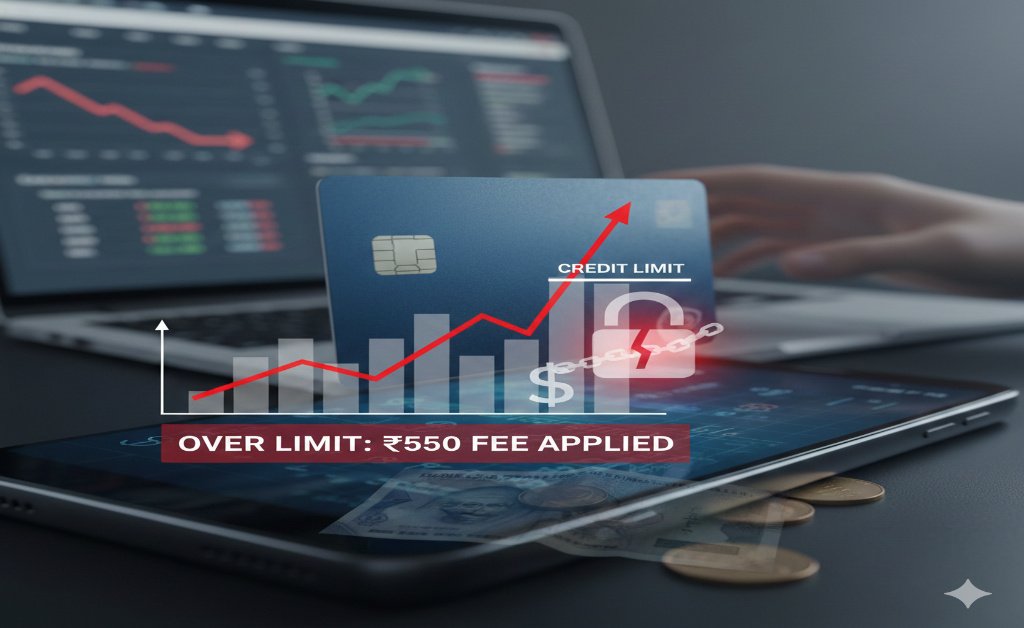
How to go about with the Over-Limit Facility and Consent Mandates
Per the guidelines provided by Reserve Bank of India (RBI), over-limit transactions are not to be effected by banks unless specifically authorised by cardholder. An “opt-in” clause has been included so that users will know they could be charged if they cross the limit. In case a user makes no activation of this kind; then any spending in excess of available credit will simply lead to transaction denial forthwith. Once activated, it usually allows a marginal percentage — say 5% to 10% — across the sanctioned limit depending on the internal scoring and repayment track record of the customer.
Assessing Over-Limit Charges and Interest Expenses
The main disadvantageous aspect of exceeding one’s sanctioned limit while making purchases is monetary punishment. Majority Indian banks impose an “Over-limit Fee” that is typically either a fixed charge of around ₹500 or 2. 5% of the exceeded sum, whichever is higher. These fees are included in the billing cycle during which the violation occurred. Also, the surplus amount joined with total outstanding balance gathers usual high interest rates linked to credit cards and may cause debt spiral if un-repaid in time.
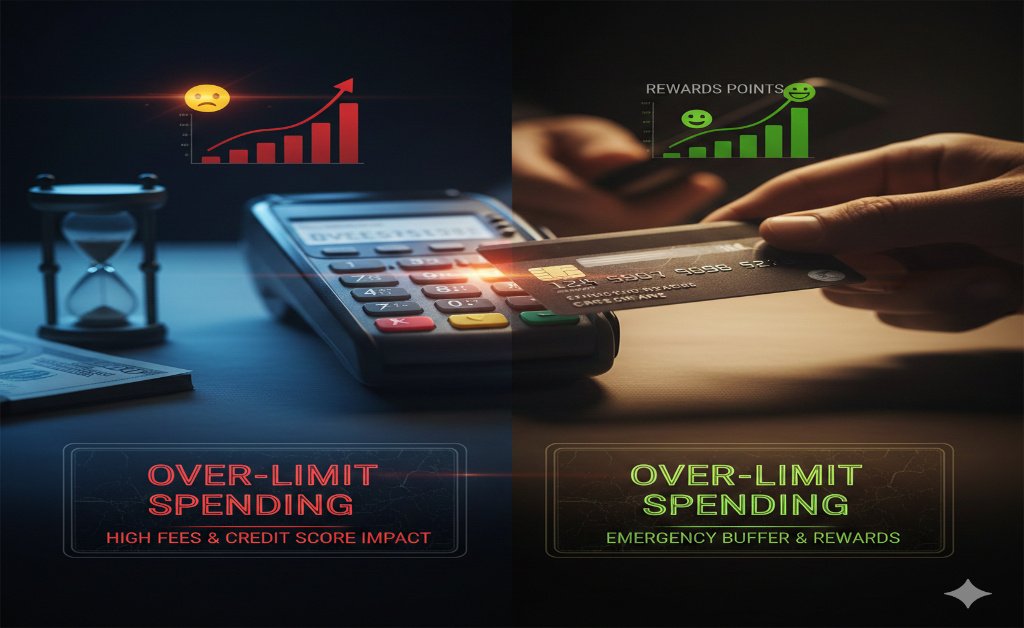
Effects on Credit Score and Credit Utilization Ratio
Apart from this, crossing the limit has great implications on CUR i. e., Cardholder’s Credit Utilization Ratio. CUR stands for percentage usage of available credit employed in determining one’s credit score. Passing the 100% mark tells credit bureaus that the loaner could be in “credit hungry” or financial crisis-related condition. It leads to lowering of the credit score, which creates difficulties or higher costs when seeking future loans like mortgages or car finance. The advisable rate of utilization is below 30% for a sound economic profile.