
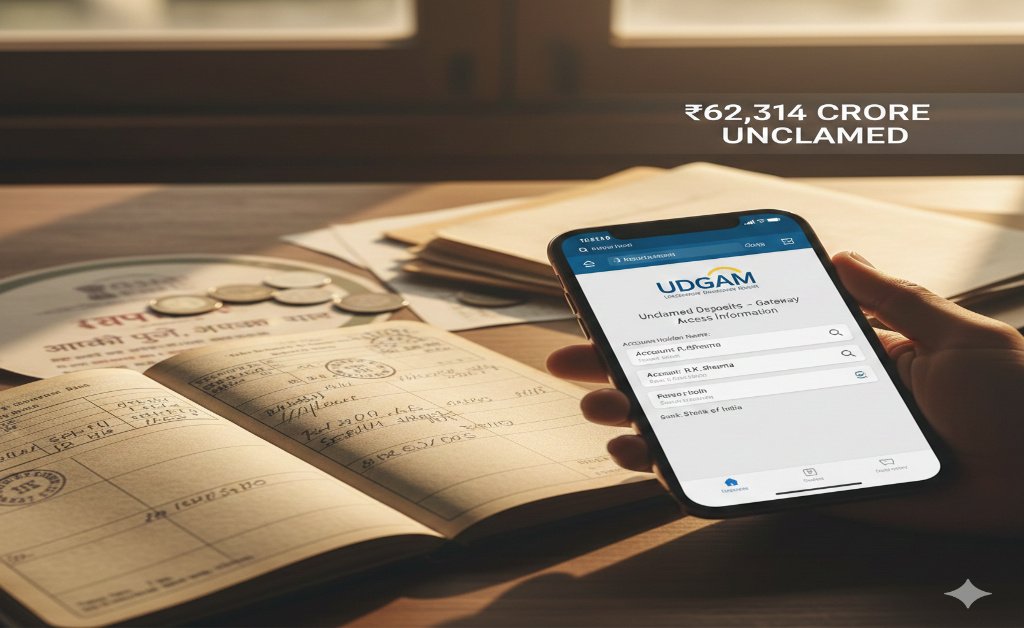
According to a report from the Reserve Bank of India (RBI), unclaimed bank deposits across the nation have drastically increased to an astounding sum of ₹62,314 crores as of December 30, 2025. These accounts that have not been dealt with for over 10 years and are in the public sector banks, mainly the State Bank of India (SBI), which holds more than 50,000 crores of this amount. To aid people in recovering their sleeping savings, the government and the RBI started the “Your Money, Your Right” campaign, thus making 2025 the year for financial reclamation.
The Scale of the Unclaimed Fund Crisis
The increase in unclaimed deposits has been stark, almost doubling since 2021 when the previous total was around ₹31,000 crores. The current figure not only consists of the balances in savings and current accounts but also includes matured fixed deposits, demand drafts, and unadjusted NEFT credits. Once a deposit is inactive for ten years, it gets transferred to the Depositor Education and Awareness Fund (DEA) fund run by the Reserve Bank of India. But, it is very important to understand that the amount is always yours or your legal heirs, and there is no time limit for reclaiming it.
Reclaiming Your Money: The UDGAM Portal Guide
The UDGAM (Unclaimed Deposits – Gateway to Access Information) portal of the Reserve Bank of India (RBI) is the main instrument for tracking these funds. The first thing to do is to go to the official website (udgam.rbi.org.in) and register through your mobile number and name. You can then log in and look for unclaimed deposits by typing in the account holder’s name and choosing the banks involved. Giving an identifier, like PAN, Voter ID, Passport number, or Date of Birth, will greatly help in making the search more accurate. After that, you will get the records that are similar to a Unique Deposit Reference Number (UDRN).

The Final Step: Contacting the Bank
One must keep in mind that the UDGAM portal is only for searching purposes, while the actual claim must be made at the bank which has the money. As soon as you find a deposit, go to the bank’s nearest branch with KYC documents such as Aadhaar and PAN, along with any old passbooks or deposit receipts if they are available. In case you are the legal heir or the nominee claiming for a deceased person, a death certificate will also be required to be submitted. The bank shall verify your documents and reactivate the account or transfer the amount to your currently active account, typically within a few weeks.