
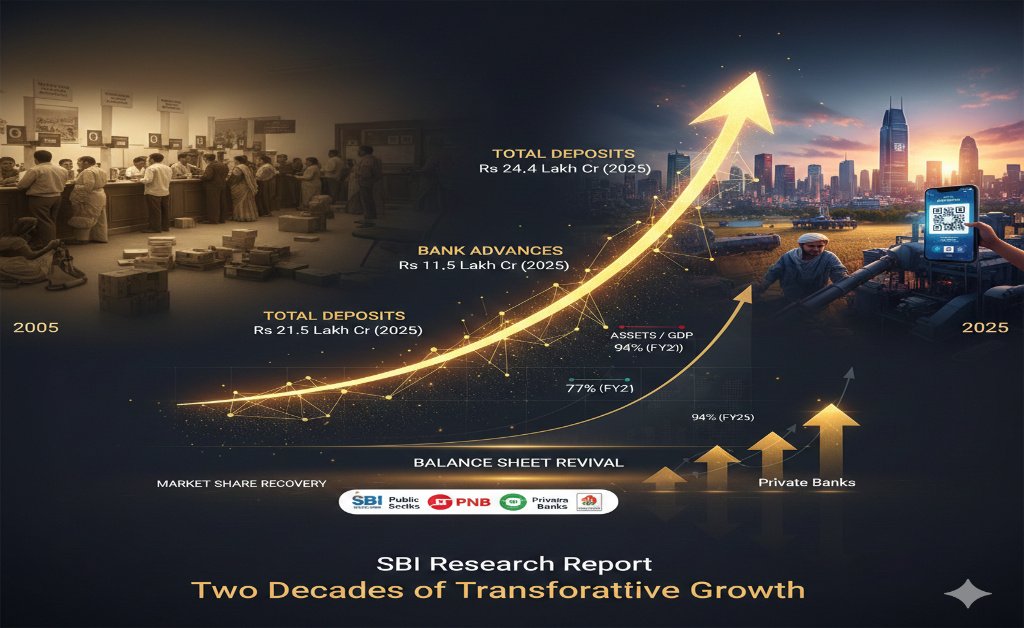
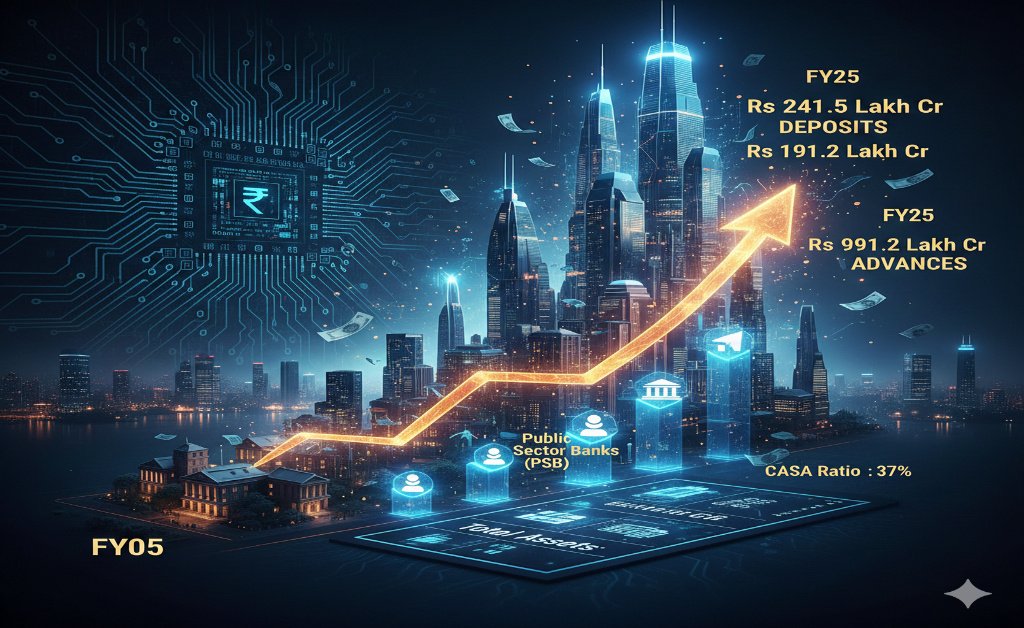
The growth of the Indian banking system is most pronounced in the raw figures, which the years FY05 to FY25 demonstrate. The total deposits in banks of the country experienced an increase from the very small figure of Rs 18.4 lakh crore to the gigantic one of Rs 241.5 lakh crore during the 20 years’ time. On the other hand, Bank Advances loans to companies and individuals also showed a rise from Rs 11.5 lakh crore to Rs 191.2 lakh crore. The banking sector’s role in the economy has increased considerably, and the public and industries are more reliant on banks than ever before, which is reflected in this growth.
Post-Pandemic Balance Sheet Revival
The global pandemic has brought about a major Balance Sheet Revival in the banking sector, according to the SBI report. Since FY21 the growth momentum has been on the rise, and total banking assets were at 77% of India’s GDP in FY21 and are projected to reach 94% by FY25. The bounce back signifies that the banks have managed to clear their portfolios and are now keen to do so with the help of credit. The increase in advances has lately outstripped the increase in deposits; however, the total Asset Size of Indian banks has already grown from Rs 23.6 lakh crore in FY05 to a target of Rs 312.2 lakh crore by 2025, which is an indicator of the strong financial system and its ability to endure.
Public Sector Banks Market Share
An important phenomenon, which the researchers diagnosed, is the gradual Market Share of Public Sector Banks (PSBs) being slowly restored. PSBs, after a long spell of losing to private rivals, are now gaining back their ground in the lending market around FY08. The factor contributing to this change is the restoration of asset quality and new acceptance of risk taking. On the deposits part, the global CASA Ratios (Current Account Savings Account) have remained stable at approximately 37%, while private banks have had more success in increasing their share of low-cost deposits, foreign banks have experienced slight erosion of their local deposit bases.