
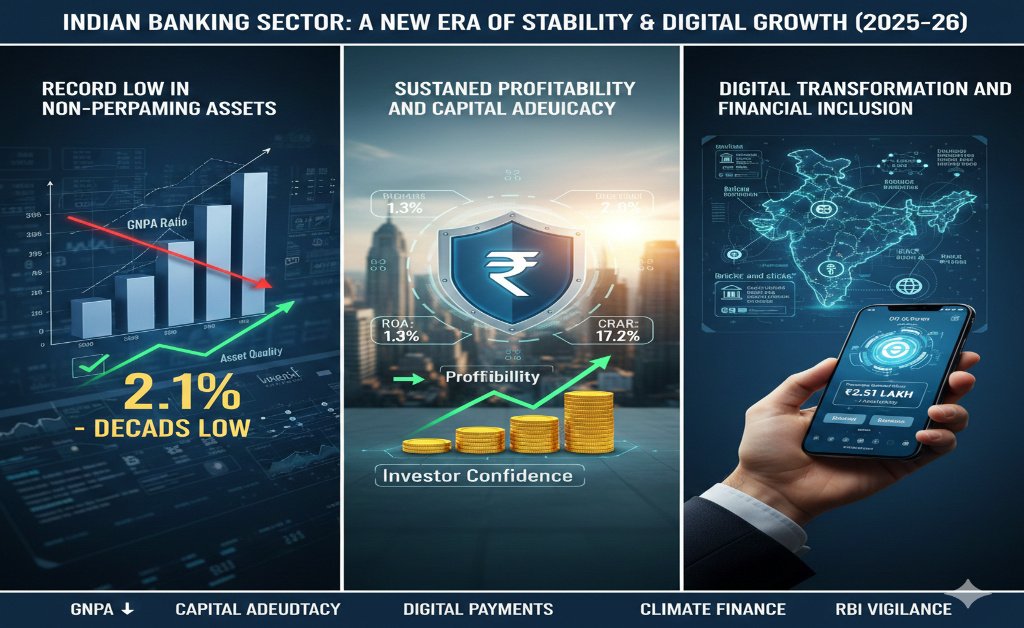
What a great moment for the Indian banking sector when the quality of the assets reached its best condition in decades. According to the latest figures, the Indian banking system’s Gross Non-Performing Assets (GNPA) ratio for Scheduled Commercial Banks (SCBs) fell to a multi-decade low of 2.1% by September 2025. This drastic slump from the past years is indicative of the era of balance sheet cleaning and disciplined credit underwriting. The reduction in the number of bad loans is viewed as one of the key factors behind the increased stability now being witnessed throughout the domestic market.
Sustained Profitability and Capital Adequacy
The financial robustness of the sector remains assured even beyond asset quality. The Return on Assets (RoA) for the first six months of the 2025-26 fiscal year was steady at 1.3%, while the Capital to Risk-Weighted Assets Ratio (CRAR) was in good condition at 17.2%. The banks have a big capital cushion that allows them to handle potential shocks and, at the same time, continue to meet the credit demands of the economy. Even though profits grew at a slightly slower pace because of the shrinking interest margins, the overall earnings profile of the major lenders continues to be a strong attraction for investors.
Digital Transformation and Financial Inclusion
The report also points out the huge change in consumer behavior through the numbers of physical ATMs going down slightly to about 2.51 lakhs, while Digital Payments and UPI are taking over as the major methods of everyday transactions. It is also interesting to note that the banks are not getting rid of the physical presence, even with the digital boom; the number of bank locations grew to 1.64 lakhs, and the focus was more on the rural and semi-urban areas. The “bricks and clicks” strategy aims to continue trust-based banking and, at the same time, make use of technology for better efficiency.

Vigilance on Interconnectedness and Climate Risk
The regulator has made it clear that Continued Vigilance about the increasingly close relationship between the banks and the Non-Banking Financial Companies (NBFCs) is essential, and that climate finance is a new and urgent topic receiving the attention of the RBI, which is in the process of developing a formal disclosure framework for identifying and managing environmental risks that might affect the long-term financial stability.