
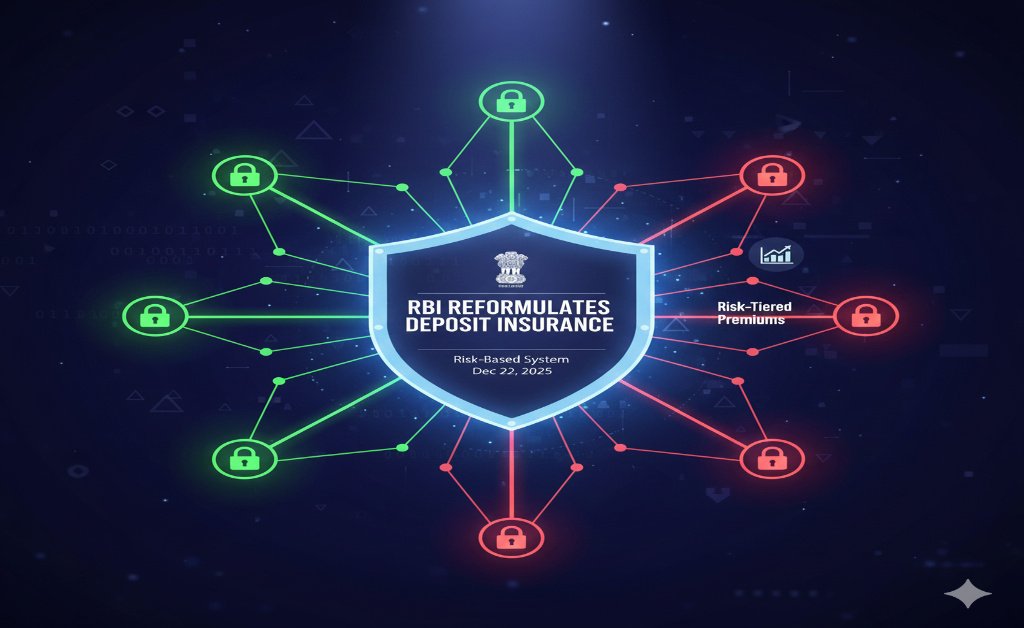
A risk-based deposit insurance framework has been officially adopted by the board of the Reserve Bank of India (RBI), which was set up to improve Indian banking with consumer-friendly regulations and practices. Governor Sanjay Malhotra chaired the board that took this significant step on December 22, 2025. The framework will allow the banks to pay premiums to the Deposit Insurance and Credit Guarantee Corporation (DICGC) according to their risk profiles determined by the quality of the bank’s assets and its capital adequacy ratio.

Security Amidst Reward-Based Regulatory Norms
With the arrival of risk-based premiums, the cross-subsidization where strong lenders helped cover the risks taken by less strong ones is going to come to an end. The RBI’s plan to keep insurance costs at their lowest possible for all banks will greatly improve the overall health of the sector. It also allows India to be surrounded by the even so-called peak banking standards worldwide, as the latter have no other requirement than to keep high capital adequacy, and in addition, even lower the ratio of gross non-performing assets (NPAs). During this meeting, the board also had a look at the “Report on Trend and Progress of Banking in India,” which pointed out the resilience of the sector but also emerging technological risks.
Impact on Private Lenders and Cooperative Banks
The framework aims for systemic stability but might still result in different operational costs for the private lenders and the cooperative banks. The banks that have higher risk concentrations will have to pay steeper premium costs, which might directly impact their short-term margins. However, the RBI has pointed out that the primary aim is to safeguard the depositor safety net, which at present protects up to ₹5 lakh per account. This announcement comes after a lot of activity in the sector, such as the RBI’s recent nod for merging four major cooperative banks in Gujarat, another step indicating the ongoing consolidation and the need for stronger institutional supervision.