
PhonePe and Paytm show different approaches in their efforts to generate new sources of income. The two leading fintech companies in India have achieved equal sales results as of early 2026 but they maintain distinct operational strategies according to their respective business models. The two companies operate their super-app business model according to their actual user base but their revenue generation methods show different patterns of value creation.
Revenue Mix: Payments vs. Financial Services
The two companies establish their main distinction through their “Revenue Mix.”PhonePe generated operational revenue of ₹3,918 crore during the first half of the financial year 2025-26 ,with its payments operation accounting for 82% to 87% of total revenue. Paytm achieved more Diversified Revenue through its total revenue of ₹3,979 crore which it reported for the same period. Paytm derives 55% of its revenue from payment operations whereas its financial services and merchant subscription business units generate more revenue than its main rival.
PhonePe’s Dominance and IPO Strategy
PhonePe has established itself as the UPI market leader with 48% of total transaction volume. The company plans to use its upcoming $1.5 billion IPO for growth which is scheduled to take place in April 2026. PhonePe has established payments as its main business activity but the company now expands its operations in lending and insurance and Share.Market stockbroking. The company achieved revenue growth from new business units which reached ₹452 crore during H1 FY26 because it wants to decrease its dependence on low-profit payment services before it goes public.
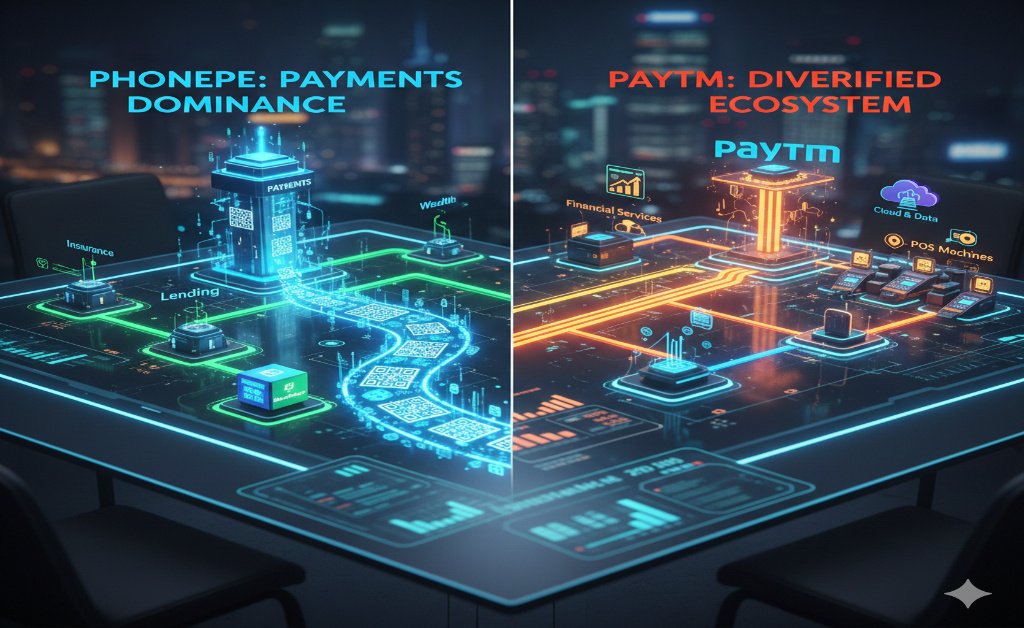
Paytm’s Diversification and Profitability Turnaround
Paytm has shifted its business model to operate as a financial services distributor which generates higher profit margins. The company earns Financial Services Revenue at two times the amount that PhonePe generates because its lending operations create revenue and its network includes more than 1.37 crore merchant device subscriptions which include Soundboxes and POS machines. Paytm has achieved positive EBITDA through merchant-led monetization efforts which brought it closer to achieving sustainable net profitability despite facing recent regulatory challenges. Paytm has developed a resilient ecosystem through its expansion into wealth management and cloud services which protects its business model from payment incentive system changes.