
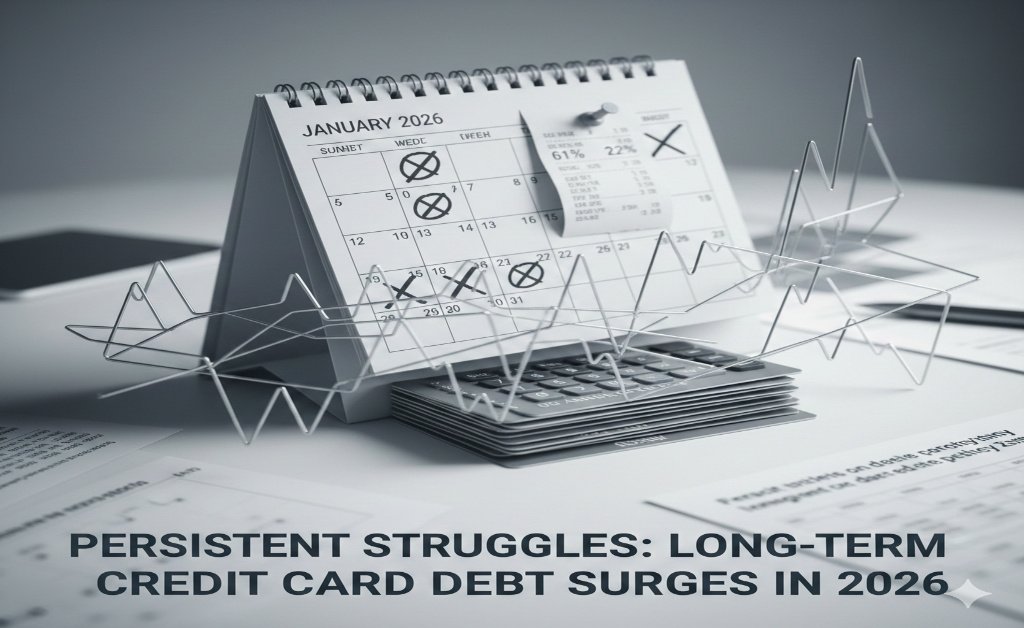
A sobering new report from Bankrate reveals that the percentage of Americans with credit card debt has not changed significantly, but the length of time such debt is held is getting critical. By January 2026, about 61 percent of credit card users with debts have been in the red for at least a year. This is a huge jump from 53 percent at the end of 2024. It indicates that many households are now caught up in a cycle of high- interest borrowing that lasts a long time, and they cannot easily get out of it.

Escalating Long-Term Debt and Financial Despair
The data points to the consumers’ diminishing hope. Just about one-fifth, or 22 percent, of the credit card debtors think that they will never be able to pay off their debts completely. This financial suffering is widely spread; not only the demographic groups of Gen X and Millennials, who are leading with 53 percent carrying month-to-month balances, but also younger Gen Zers and older Baby Boomers are all facing the “temporary” debt turning into a multi-year burden scenario. The “stickiness” of this debt is the major concern for the banking industry, as it hints at a change from the customers having discretionary spending to the customers being structurally dependent on credit.
Emergency Expenses and Operational Vulnerability
The very first and foremost cause of the debt is the non-discretionary expenses. Just over one-third of the debtors give emergency expensessuch as medical bills, car repairs, and home maintenanceas the main reason for their debts. Groceries and utilities account for a daily living cost, for which 33 percent of the individuals use credit cards. Banks are now more vulnerable to inflation since the consumer credit portfolios are highly sensitive to it. With the use of consumer credit for covering essentials, the consumers’ capacity to ride out the new economic conditions is reduced, thus making the banks more vulnerable.
Interest Rate Stagnation and Debt Payoff Challenges
The consumers are still waiting for their turn to be helped despite the Federal Reserve’s recent interest rate changes. According to the latest data, the average credit card rates stand at 19.7 percent, and it is predicted that they will stay above 19 percent until the end of 2026. The situation of high-interest rates has put consumers in a “math trap”; if they only pay the minimum on an average balance of $6,523, it will take them over 18 years to repay, and they will incur almost $9,500 interest charges. As a result, a good number of debtors are postponing major life decisions, such as buying homes or having children, which again negatively affects the whole financial ecosystem.