
The National Payments Corporation of India (NPCI) is now presenting the “Credit Line on UPI” (CLOU) idea more vigorously as a solution to the issue of digital payment and formal credit that is hard to solve nowadays. This initiative, which targets the next 300 million users, permits consumers to receive pre-approved credit instantly through their UPI apps. The main difference between UPI and credit cards is that UPI does not involve any physical hardware requirement but just doing a simple QR code scan. The current action is all about adding “interest-free periods” of up to 45 days, thus, it makes the UPI credit lines look like a credit card in terms of convenience but at the same time, it keeps the frictionless nature of the interface which is the most used in the Indian economy.
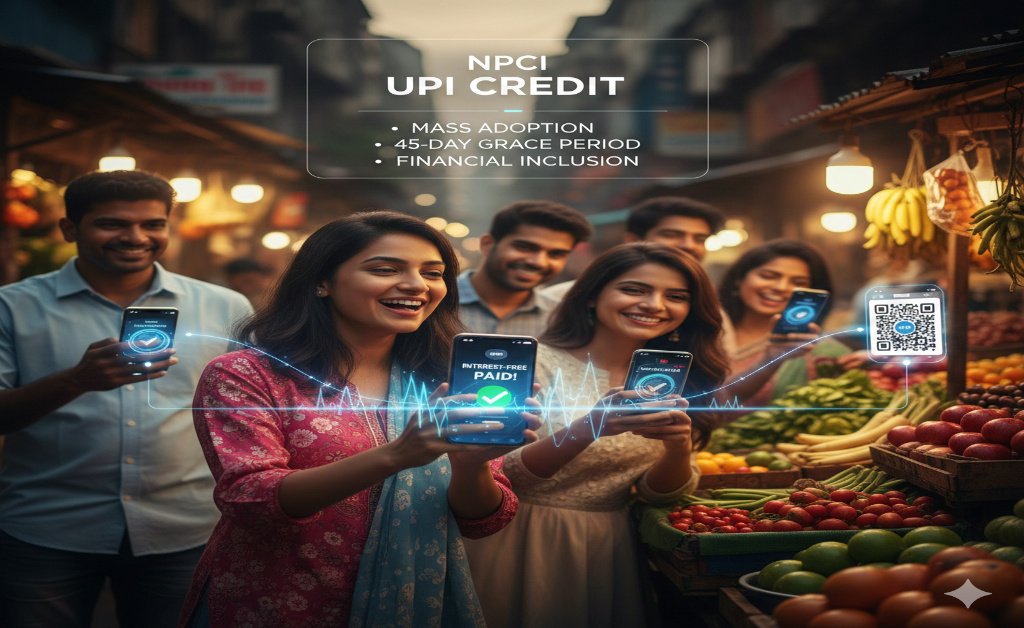
Consumer Growth Through Integrating Interest-Free Periods
In order to be on par with the credit card companies, UPI-linked credit has become a standard feature for banks and fintech partners that come with interest-free periods. The biggest players in this field, Yes Bank, and HDFC, for instance, have come up with the “Spend Daily, Repay Monthly” phases where the customers are allowed to take a grace period that is the same as the one given in a billing cycle. The plan is to promote widespread use of the service by offering a financial buffer for necessities of daily life. By allowing the users to postpone their payments without incurring interest immediately, NPCI is effectively changing the consumer mindset from “debit-first” to “credit-linked” digital transactions.
Expansion into Small Merchant Ecosystems
Local “Kirana” stores and small vendors become the major breakthrough for UPI credit lines in 2026. The high merchant fees and the cost of the machines hinder the traditional credit cards to a great extent in this segment. On the other hand, CLOU utilizes the existing UPI QR codes and thus making credit accessible for micro-transactions. The democratization of credit is especially useful for the MSME sector, as small businesses can now use their pre-approved limits to pay suppliers instantly. The latest guidelines by NPCI have made sure that these transactions are cost-effective for both the buyer and the seller.
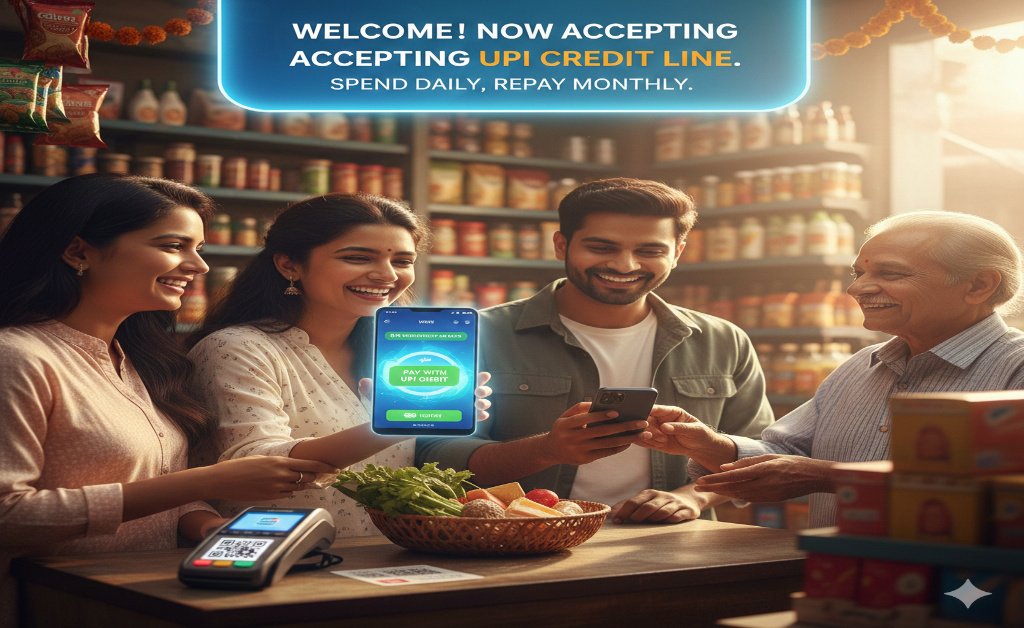
Strengthening Financial Inclusion through Digital Footprints
The “Credit Line on UPI” framework is a payment tool as well as a financial inclusion catalyst. Banks are now using digital footprints like transaction frequency and repayment history to offer credit to those who are new to credit and do not have any formal income documentation. This kind of data-driven underwriting model has considerably lowered the banks’ acquisition costs, enabling them to make small, more manageable credit limits of about ₹2,000 to ₹60,000. As these digital-first credit products grow, they are anticipated to set the standard for embedded finance globally.