
The main concern of the middle class and corporate India has changed from substantial rate cuts to “cutting friction” as the government gets ready for the Union Budget 2026. CII, FICCI, and ASSOCHAM, the primary industry organisations, have presented a common wishlist that revolves around the TDS regimen and unfreezing the enormous chunk of capital that is now caught up in legal disputes.

Simplifying the TDS structure for increased business activity
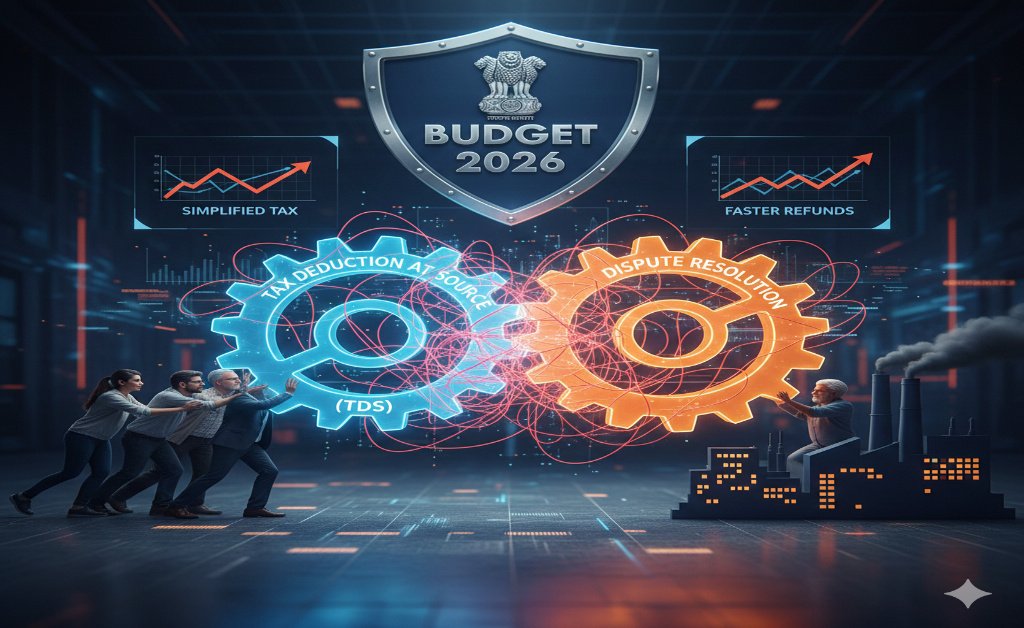
Among the various demands, the most prominent one is the simplification of the complex TDS structure. Businesses have to deal with a compliance rate of more than 35, and quite often, they make errors due to the high complexity involved. Experts from the industry have suggested that these be merged and treated as only 2 or 3 broad slabs (e.g. 0.1%, 2%, and 10%). Moreover, there is a substantial request to exempt TDS on the transactions between GST-registered persons, stating that there already exist digital transaction trails under the GST system, so why tax collection, which is already a drain on the working capital, is made unnecessary.
Accelerating Dispute Resolution and Appeal Clearances
One more critical issue to address is the “silent crisis” of tax litigation that ranks high among the priorities. Presently, more than 5.4 lakh appeals are waiting for a decision by the Commissioner of Income Tax (Appeals), and the amount at stake is a whopping ₹18 trillion. To prevent such a situation from arising again, stakeholders are seeking the introduction of Statutory Timelines for case disposal. Among the different suggestions put forth, the resolution of disputes involving values (above ₹100 crore) is to be done within one year, and a “dual-track” system for separating simple procedural issues from complex legal interpretations is to be introduced. This would lead to middle-class people and smaller enterprises experiencing a quicker influx of refunds and a great deal of uncertainty being lifted off them.
Middle Class Expectations for Enhanced Disposable Income
The middle class is the chief beneficiary of the standardisation of Deductions while businesses concentrate on procedural reforms. The projections for the new Income Tax Act 2025, which is presumed to be the basis for this budget, are a rise in the rebate threshold under Section 87Aperhaps as high as ₹12 lakhand a more understandable capital gains tax regime. Additionally, taxpayers are looking for a “Statutory Taxpayer Rights Charter” that would legally assure time-bound services and accountability for administrative delays, thus making sure that the move to a digital-first tax era does not deprive taxpayers of their rightful procedural fairness.