
Incredible news from the Reserve Bank of India (RBI) that today, on December 29, 2025, they are giving out the annual ‘Report on Trend and Progress of Banking in India 2024-25’, which indicates the Indian economy is experiencing a phase of great stability. The document shows that the Indian banking sector has been able to turn global challenges into opportunities to come out with the best quality of assets in several decades. The report credits this achievement to the banking sector’s prudent credit management practices, push towards recovery by means of cleanup and a well-suited regulatory framework, which has been a motivator for banks to take the necessary steps to clean up their balance sheets within the last couple of years.
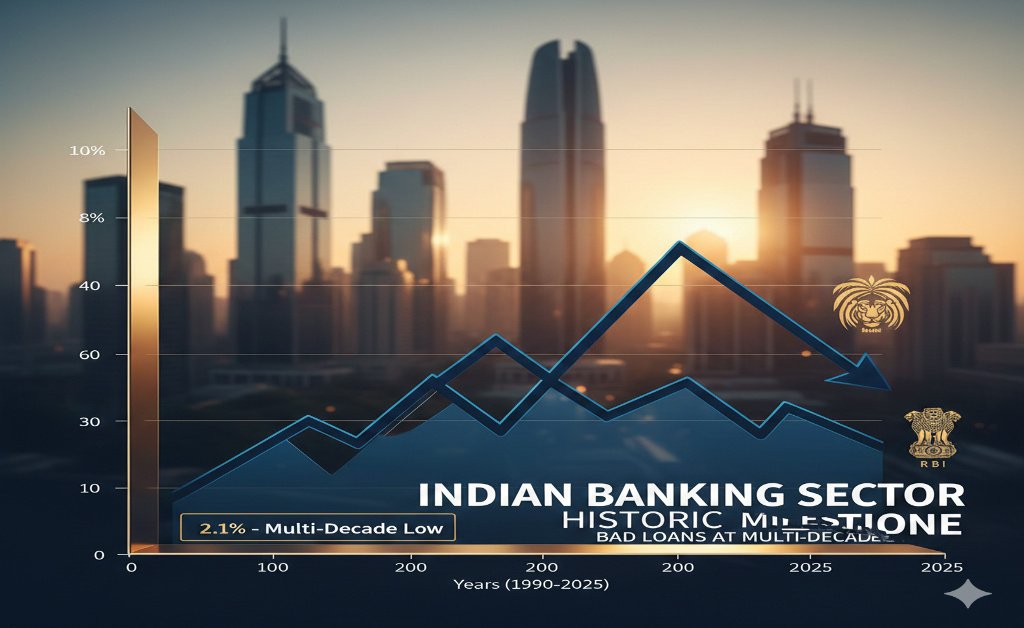
Dramatic Drop in the Total Non-Performing Assets (GNPA)
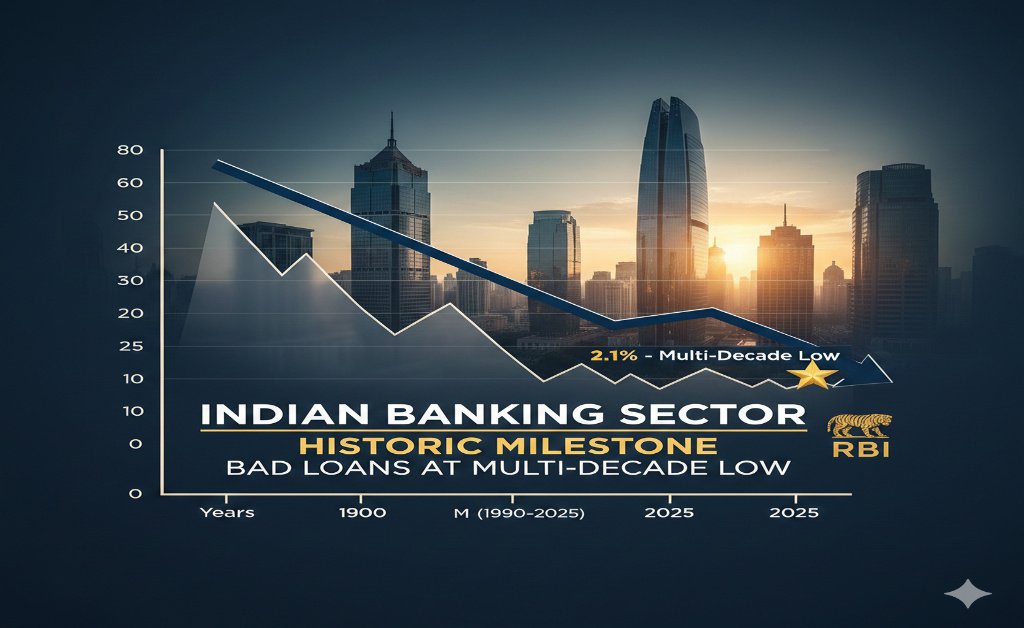
A significant part of the RBI’s report is about the drastic loan quality enhancement. The Non-Performing Asset (NPA) ratio, which indicates the overall amount of bad loans, decreased to 2.1 per cent as of September 2025, which is the lowest level for decades. That is a further improvement from the 2.2per cent recorded in March 2025 and 2.7 per cent in the previous year. In the decline, both public and private sector banks were involved. The falling of the bad debts ratio by a little less than half over the last year is not only an indication of proper lending practices being established but also of quick and efficient resolution of cases through the Insolvency and Bankruptcy Code and other mechanisms.
Resilience Through Double-Digit Balance Sheet Growth
The sector’s balance sheets continued to grow by 10% or more even in the year 2024-25, but the growth rate was a bit lower when compared to the previous fiscal year. There was an increase in bank deposits by 11.1%, and credit growth was 11.5%. The banks were able to achieve this growth due to a very strong Capital to Risk-Weighted Assets Ratio (CRAR), now at 17.2% as of September 2025. This high ratio indicates that banks are holding a lot of capital, all of which can serve as a buffer in case the economy faces shocks. The RBI characterised this “Goldilocks” situation of steady growth coupled with low risk as one under which the banking sector could be regarded as a mighty engine, or at least a powerful force, in the economic growth of India, which is now at the very beginning of its expansion trajectory.
Sustained Profitability and Operational Efficiency
With Scheduled Commercial Banks (SCBs) posting a Return on Assets (RoA) of approximately 1.3% to 1.4%, their overall financial situation is still very good. The profit growth could not maintain the same high pace as before due to the rising interest costs and the margins being squeezed, but still, the total net profit for SCBs went up by 14.8% and reached ₹4.01 lakh crore. This profitability was also the result of the better non-banking financial company (NBFC) sector performance as well as that of urban co-operative banks, which not only reported good asset quality but also had capital positions that were strong, thus strengthening the overall stability of the Indian market.