
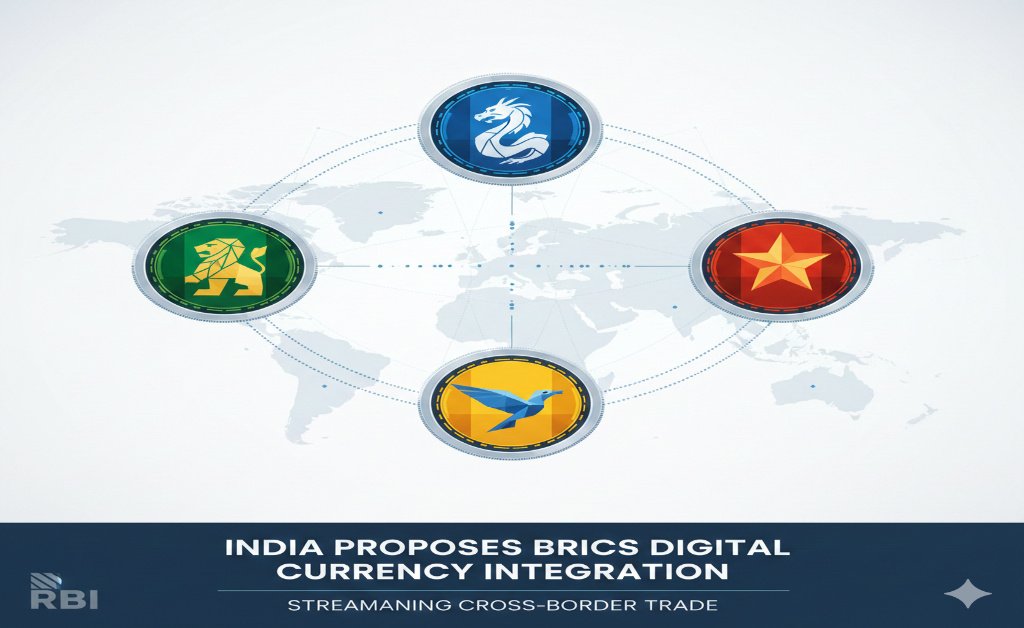
In a significant step that could alter the landscape of global trade, the Reserve Bank of India (RBI) has suggested connecting the digital currencies of the BRICS nations that are authorized. This project, aiming to get the approval of the 2026 BRICS summit, is destined to make cross-border trade and tourism payments easier. The bloc, which consists of Brazil, Russia, India, China, and South Africa, is connecting Central Bank Digital Currencies (CBDCs) in hopes of improving payment efficiency and also eliminating the costs that come with the traditional banking system that relies heavily on intermediaries.
Enhancing Interoperability for Cross-Border Transactions
The main point of the RBI proposal is to establish technical interoperability among the varied digital payment systems of countries involved. Based on the 2025 Rio de Janeiro declaration, India is pushing for a situation in which the “e-rupee” would be able to talk with the CBDCs of the other nations. Directing this interaction would mean allowing for almost instant settlements, and thus eliminating the usual delays that come with global trade finance. On the other hand, bringing this about necessitates an agreement on the regulations governing the management and technological sharing, which is the main challenge that the central banks involved face.
Mitigating Risks through Central Bank Digital Currencies
India is still trying to sell its e-rupee as a more regulated and safer option for private stablecoins. RBI representatives have pointed out that Central Bank Digital Currencies, unlike digital assets, do not bring the same systemic risks to monetary stability or fiscal policy. By offering a government-backed digital wallet, the RBI is hoping to attract more users for government subsidy transfers and retail use. This maneuvering in the market is also seen as a way to increase the rupee’s global presence without an explicit de-dollarization strategy.
Addressing Trade Imbalances with Currency Swaps
One of the major challenges in the integration of BRICS digital currencies is the issue of trade imbalances among the member countries. To overcome this problem, the authorities are looking at the possibility of using bilateral foreign exchange swap arrangements. In these swaps, the central banks would agree on a weekly or monthly basis to settle the transactions, thus avoiding the piling up of large amounts of local currencies that cannot be used—something that had already affected trade between India and Russia. This way of doing things is seen as an important factor in maintaining the digital link-up economically feasible for all participants.