
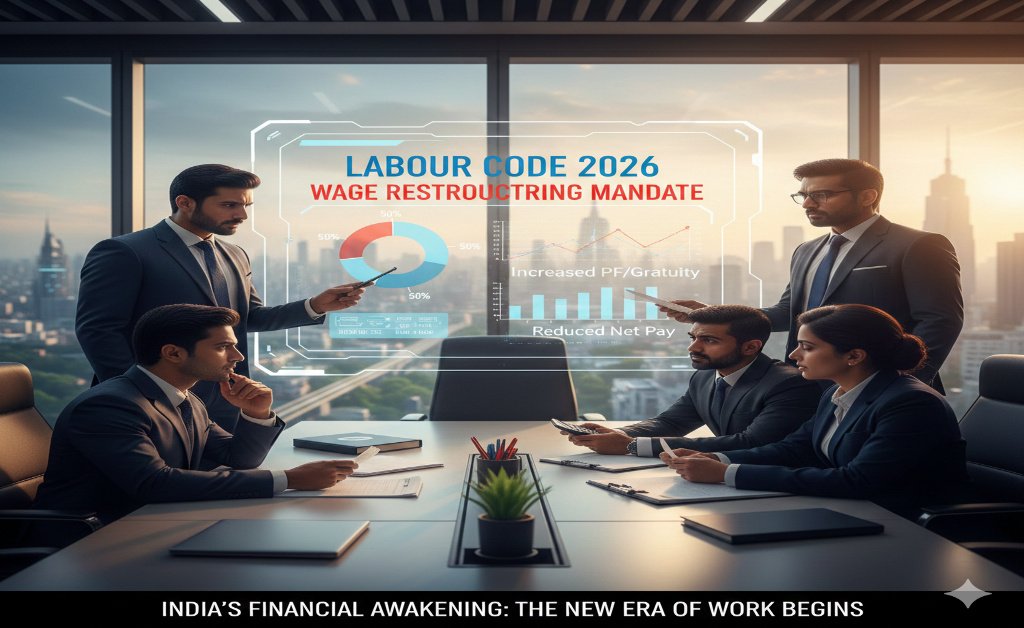
The Labour Code 2026 has brought about a major restructuring of wages and remittances through the imposition of higher minima for each of these categories. The Indian government is attempting to implement the four Labour Codes 2026, which are the consolidation of 29 existing laws. A very important rule of these codes states that the basic pay must be at least 50% of the total salary of an employee. Even though this structural change forwards and secures social security and provident fund contributions in the long run, it also has a short-term effect, an immediate side effect, that is, a significant cut in the monthly salary of a large number of white-collar workers. R
Reductions in Take-Home Pay Affect Consumption
This reduction in take-home pay is expected to be like a “bee sting,” not a shock, but its total impact on the economy is large. Analysts think that a professional with a 25 lakh ₹ annual income could have his or her monthly cash-in-hand reduced by around 8,000 ₹. As a result, it is expected to lose India’s “consumption engine”, as people limit their spending on food delivery, electronic gadgets, and weekend outings due to the tighter cash flow coming in every month.
New Personal Finance Strategies Needed
The new situation is a total personal finance reset for the salaried class in India. It is not sufficient anymore to just depend on a regular paycheck. The financial consultants suggest that employees must now engage in active tax planning and compensation restructuring because the “old money formula” of simple savings is breaking down. There is also a growing concern that people might undertake high-risk investments to compensate for the reduced investable surplus, which will render emergency funds and disciplined planning even more critical than ever.
Corporate Transition and Social Security
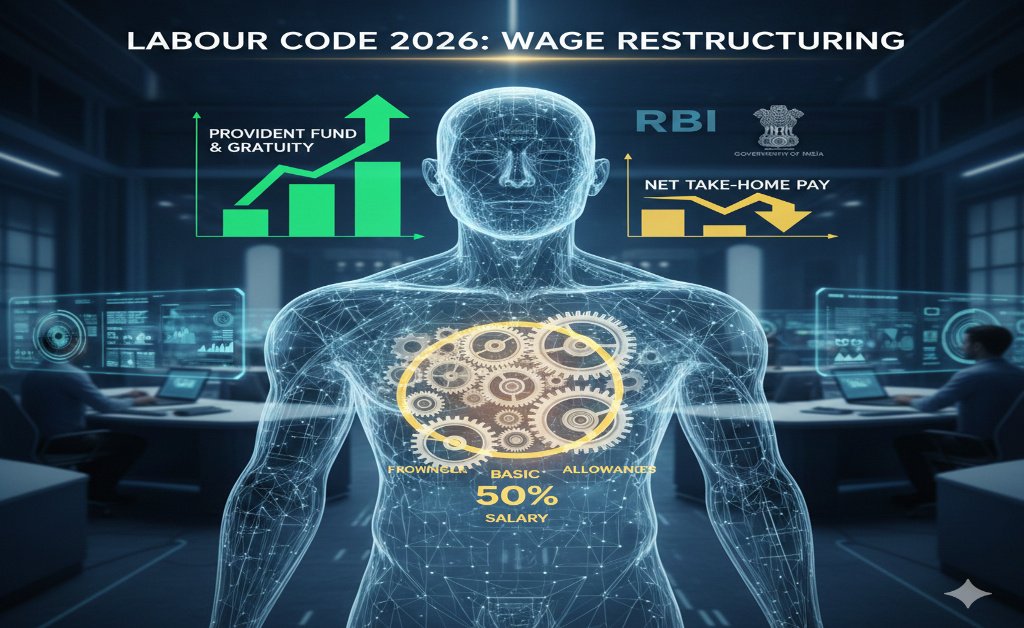
Employers are going through a governmental hassle at the moment that would cost around 200–400 internal person-hours just to apply the new 50% wage definition. The short-term friction and decreased liquidity resulting from this move are unfortunate, but the long-term vision of this reform is to eventually have a universal social security coverage and a uniform minimum wage that would not only protect workers better, including those in the gig economy, but would also ease their way through an increasingly unstable labor market.