
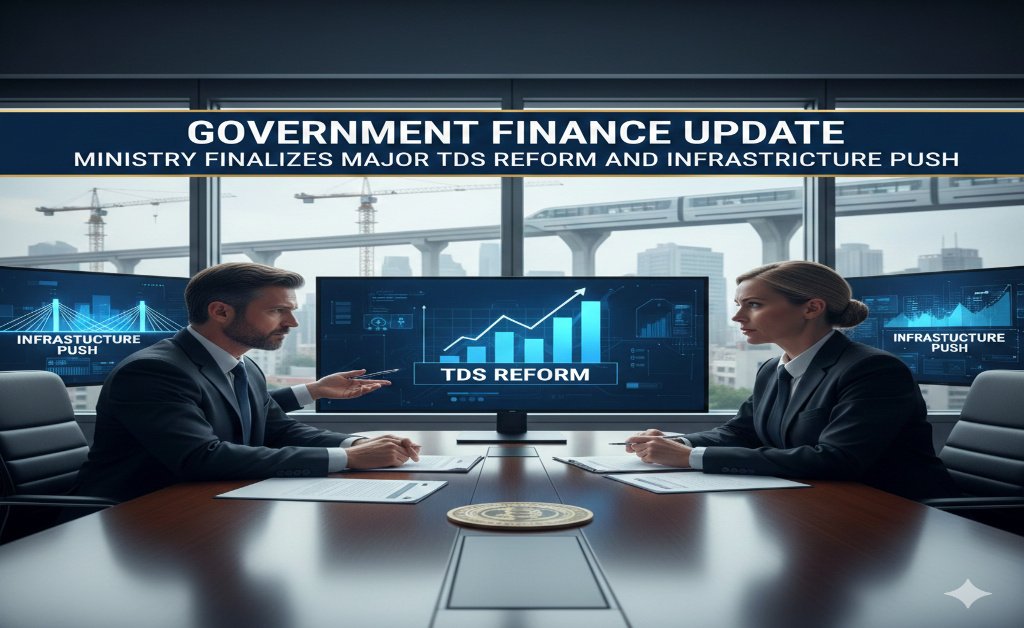
The Ministry of Finance has just indicated a notable change in India’s fiscal outlook as the Union Budget preparation for February 1 reaches its last step. The government has taken a very bold step towards the tax-deductible-at-source (TDS) framework reform of the whole system, which has the long-term objective of unblocking the capital tied up in businesses. The new scheme combining the tax rates and employing the GST network for verification in real-time is expected to be the main reason that has been contributing to the skyrocketing of tax refunds, which only last fiscal year reached a very high historical level.
Strategic Infrastructure Investment and Rs 14 Lakh Crore Capex Target. In a pre-budget high-level meeting, the government talked about the colossal Rs 14 lakh crore infrastructure investment, which will keep India’s GDP growth at 8% during the next few years. This financial plan gives the first place to the “Viksit Bharat” vision with a focus on high-speed rails, green energy corridors, and digital highways. The economists point out that such a large capital expenditure is basically aimed at drawing in private investments, thus keeping the banking system strong enough to provide support for the large-scale industrial projects through the 2026-27 cycle.

Jan Dhan 2.0 initiatives that strengthen Financial Inclusion
In a move that targets the rural poor and at the same time boosts financial services in these areas, the Indian government has launched a new phase of Pradhan Mantri Jan Dhan Yojana (PMJDY) aimed specifically at dormant accounts in rural clusters. The government is now making the financial assistance under the scheme more focused and specific by providing “made-to-order” credit and insurance products for women entrepreneurs and self-help groups. The government aims to reach full social security saturation and thus, every Jan Dhan account holder will be given instant access to micro-credit and accident insurance without the requirement of collateral through the new Grameen Credit Score.
Implementation of Direct Benefit Transfer via Enhanced PFMS Protocols
The Ministry of Finance has proclaimed a digital governance milestone with the Public Financial Management System (PFMS) being responsible for processing more than 966 central schemes. During this financial year, more than 210 crore transactions have been done through Direct Benefit Transfer (DBT). This mechanism of transferring funds in real time has become the foundation of the government’s financial sector transparency, since it has been able to completely wipe out leakages and guarantee that more than Rs 2.87 lakh crore was directly given to the beneficiaries by the end of the December quarter.