
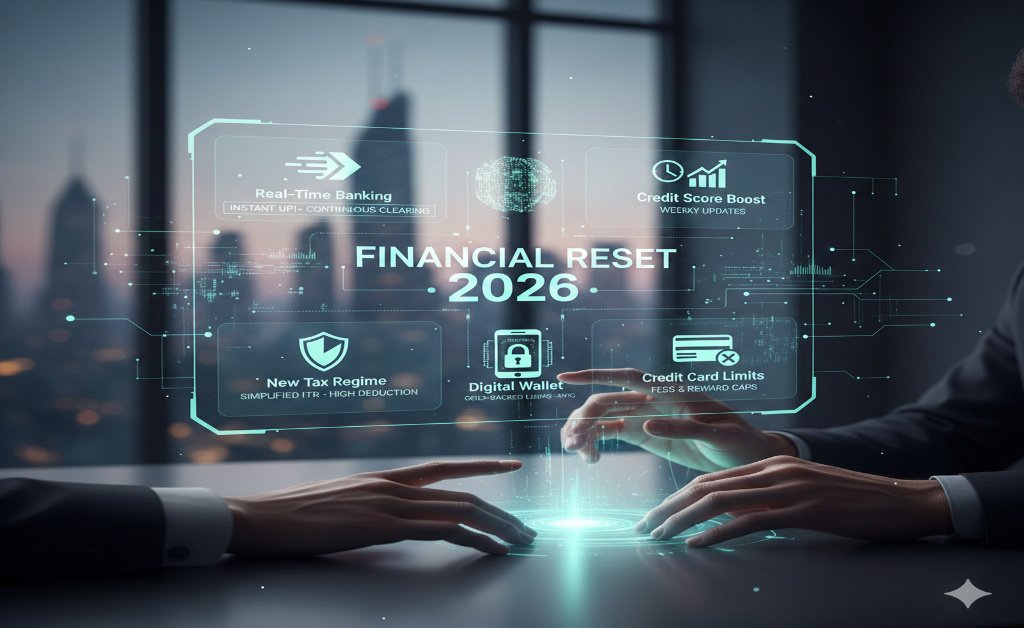
On January 3, 2026, the Reserve Bank of India (RBI) will unveil Phase 2 of the Continuous Clearing System. This change will allow clearing of cheques in real time instead of the current T+1 day cycle. As a result, there will be almost instant debit and credit of funds between 10 AM and 4 PM. At the same time, credit bureaus will start to refresh credit scores weekly. This reporting pattern means that your credit profile will show any loan payment or default within days, thereby affecting your loan eligibility and interest rates immediately.
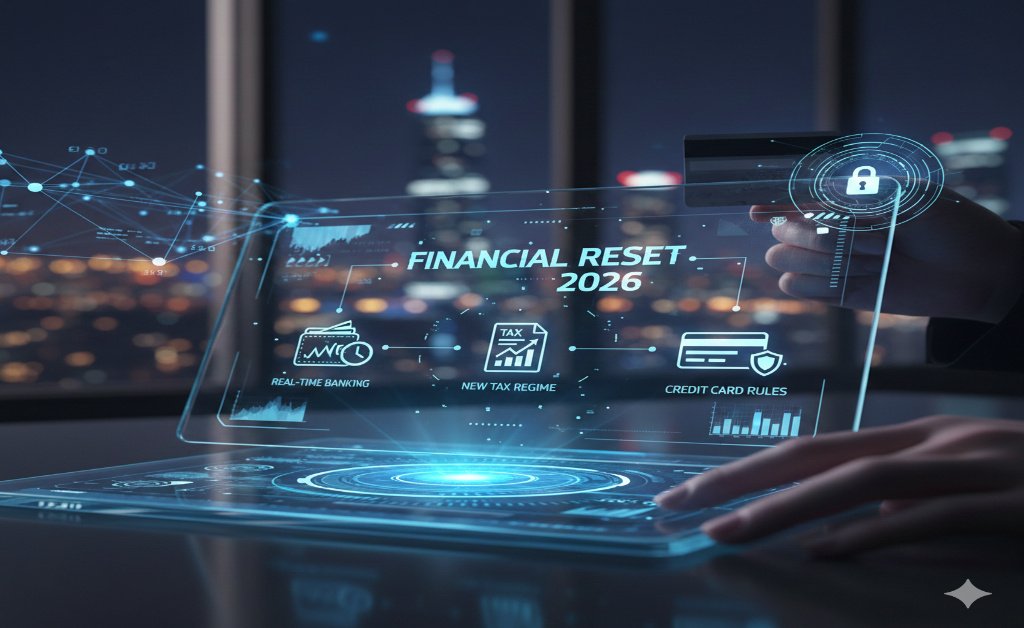
New Tax Regime as the Default Standard
The New Tax Regime has taken over the middle class under the current Budget provisions, with the tax-exempt income limit effectively raised to ₹12.75 lakh (the ₹75,000 standard deduction is included in this). Additionally, a simplified Income Tax Act 2025 is being drafted for a complete rollout in April, but pre-filled ITR forms will be available in January that capture your spending data to an even greater extent. It will be noted that non-linkage of PAN and Aadhaar by the taxpayer on or before December 31, 2025, will result in the taxpayer’s accounts becoming inoperative and refunds being blocked from January 1.
Credit Card Fee Hikes and Reward Caps
Big banks such as ICICI Bank and HDFC Bank are making major revisions to their credit card conditions at the beginning of 2026. The ICICI Bank is going to enforce a 2% charge for online gaming and a 1% fee for loading third-party wallets (like Amazon Pay or Paytm) that exceed ₹5,000, along with other changes that are in place. On top of that, there will be a limit to the number of reward points you can earn on thespendings made for insurance and utility services for different levels of the card. HDFC Bank is also restricting Airport Lounge Access for its cardholders, such that a simple swipe will no longer be sufficient, but a voucher-based system connected with the quarterly spending thresholds will be in place.
Gold and Silver Loan Restrictions
The RBI has made it harder for borrowers who use gold and silver as collateral. After 1st January 2026, banks will no longer be allowed to accept primary gold or silver (like bars) as collateral for loans. Only loans against ornaments, jewelry, and coins will be allowed with a maximum Loan-to-Value (LTV) ratio of 85% for amounts up to ₹2.5 lakh. This action is designed to avoid speculative borrowing and to make sure that the ownership of the pledged asset is verifiable, but it will have the effect of impacting those who consider gold their quick liquidity tool.