
Transatlantic ties have today reached a critical breaking point as the leaders of the European Union called for an “extraordinary meeting” to discuss the situation with the Trump administration. The crisis was initiated by the announcement of a 10% tariff on goods from eight NATO countries, including the UK, France, Germany, and Denmark, which were primarily meant to influence the acquisition of Greenland. According to European Council President Antonio Costa, the tariff was a threat to the global world order that was beyond anything the world had ever witnessed before, thus prompting the 27member bloc to halt major trade negotiations with the U.S. as a form of immediate retaliation.
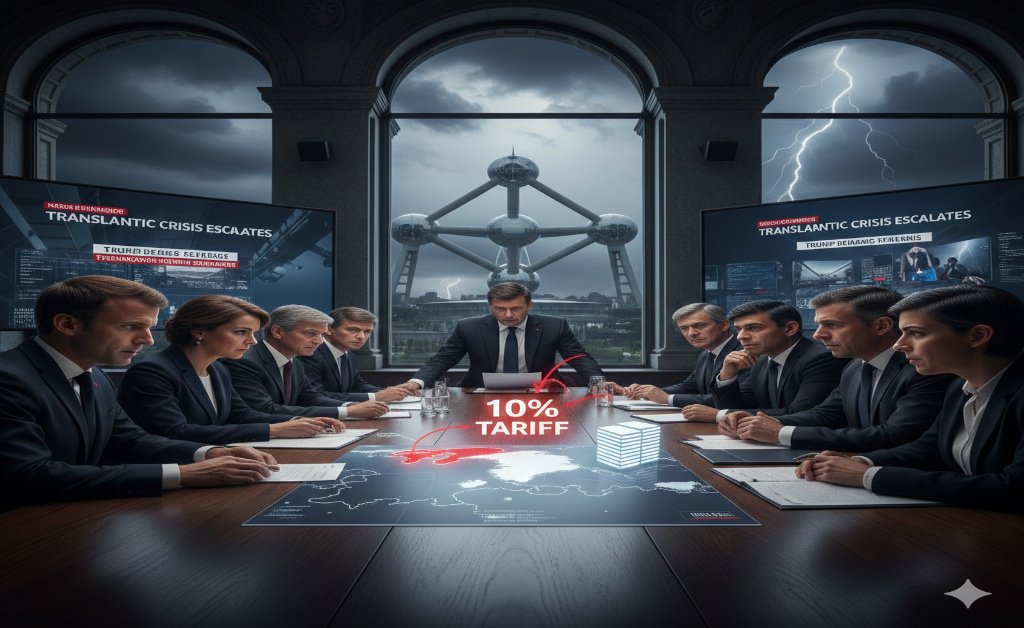
Transatlantic Trade Relations Facing Chaotic Contraction
The sudden implementation of tariffs has raised a lot of concern in the global markets, with economists cautioning about a “chaotic contraction” in the trade volume between the U.S. and its oldest allies. The Trump administration has made it a point to directly relate these economic penalties to the refusal of the European countries to help with U.S. interests in the Arctic. Together, Danish Prime Minister Mette Frederiksen declared that Europe “won’t be blackmailed” and other EU leaders have started writing down a list of counter-tariffs on American technology and agriculture products. This deadlock indicates the most acute diplomatic rift in the NATO alliance for a long time which could, in turn, cause disruptions in the supply chains worth billions of dollars.
Strategic Leverage and the Greenland Acquisition Push
The White House’s trade strategy has, to a large extent, redirected the spotlight of American foreign policy to the Arctic region. President Trump characterized the ceiling on tariffs of 10% as a must-have for U.S. National Security and Resource dominance in the North. While the American administration regards the purchase of Greenland as a strategic requirement for the 21st century, the European leaders see it as an insult to the sovereignty of nations. With the U.S. thinking of a “permanent Board of Peace” setup for resolution of international disputes, the escalated rhetoric has gone beyond diplomacy. Critics, however, argue that the proposed $1 billion entry fee for the board is nothing but pay-to-play diplomacy.
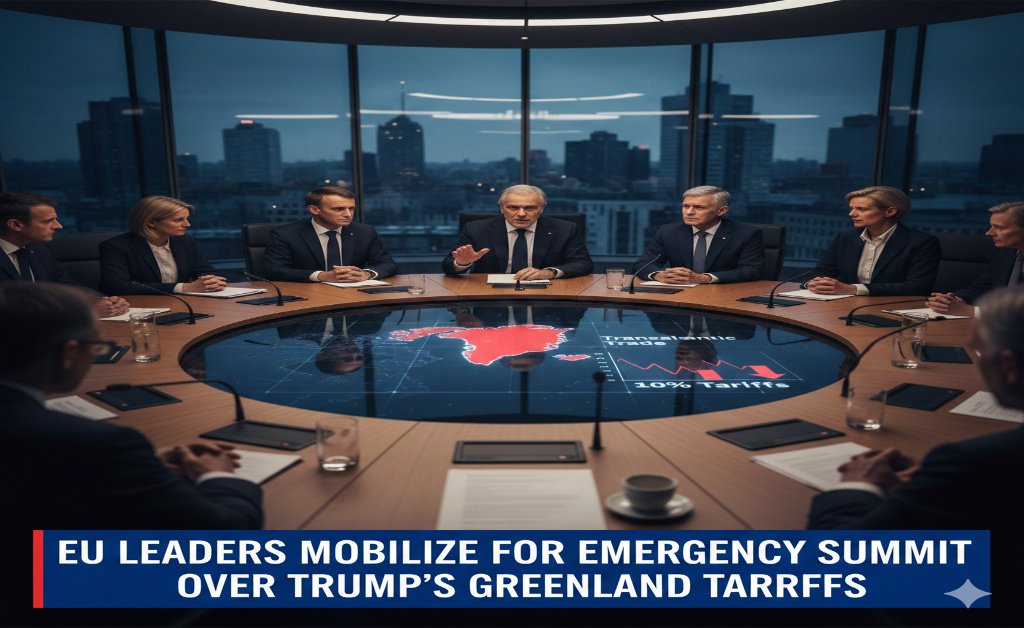
European Retaliation and Global Economic Impact
A global economic recession, caused by the fallout of the tariffs, is imminent if the EU does not succeed in softening the full effect of the tariffs. The European Commission has indicated it is ready to act “swiftly and decisively” to shield its industries from what it perceives to be illegal protectionism. Analysts believe that if no agreement is reached during the emergency summit of this week, rising costs of consumer goods on both sides of the Atlantic might actually wipe out the recent inflation control gains. The situation is still very much in flux with both Washington and Brussels trying to figure out who will give in first in this risky geopolitical poker game.