
Bandhan Bank has done some changes to its policies to increase the number of people who can access the services of formal banking. It will now be easier for clients with Standard Savings Accounts and low balances to adopt digital and branch banking retail products, as this type of customer is specifically targeted by this private sector lender. This will be achieved through the introduction of a reduced Monthly Average Balance (MAB) prerequisite that targets the underprivileged population and forces them to take up both digital and conventional banking means.
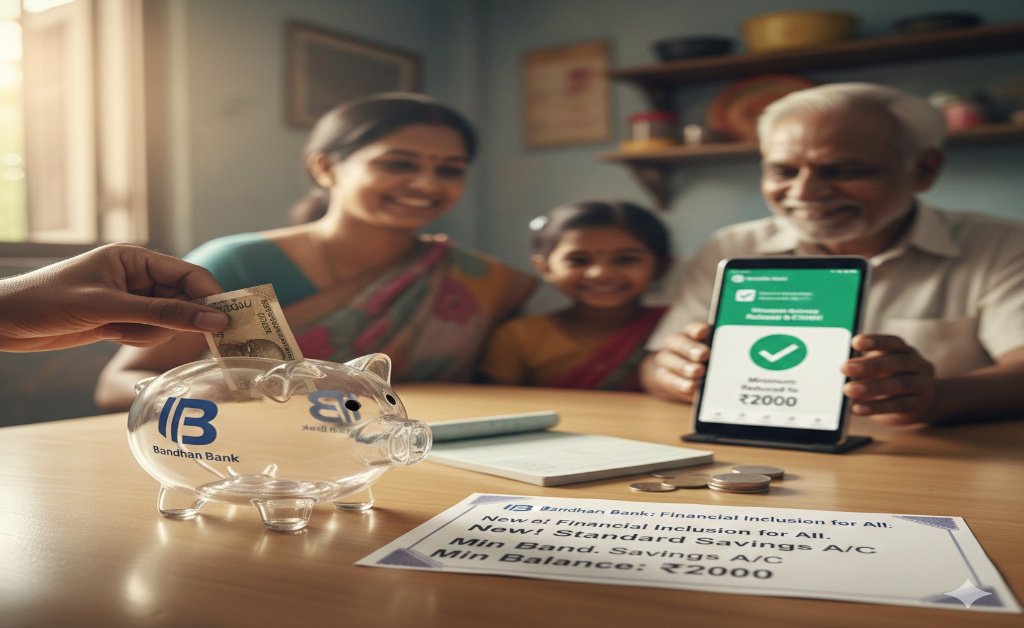
Introduction of Reduced Monthly Average Balance Requirements
Starting on 1st February 2026, the Monthly Average Balance that should be maintained in Bandhan Bank Standard Savings Account will reduce from ₹5,000 to ₹2,000. By doing this, account holders would be able to keep their accounts while having less money lying idle. Notwithstanding this considerable fall in the maintenance cap, however, the bank stated that it will retain all existing facilities and advantages linked with such accounts so as to uphold service standards for customers.
Promoting Accessible Banking for Financial Inclusion
This move is in line with the bank’s fundamental belief of promoting inclusive growth amidst various demographics across India. According to Rajinder Kumar Babbar, Executive Director & Chief Business Officer at Bandhan Bank, they have not forgotten about financial inclusion in their vision. Through reducing the entry as well as upkeep hindrances on standard savings accounts, it hopes to give many more people the strength to save and control their money without constantly being fined for having high balances.
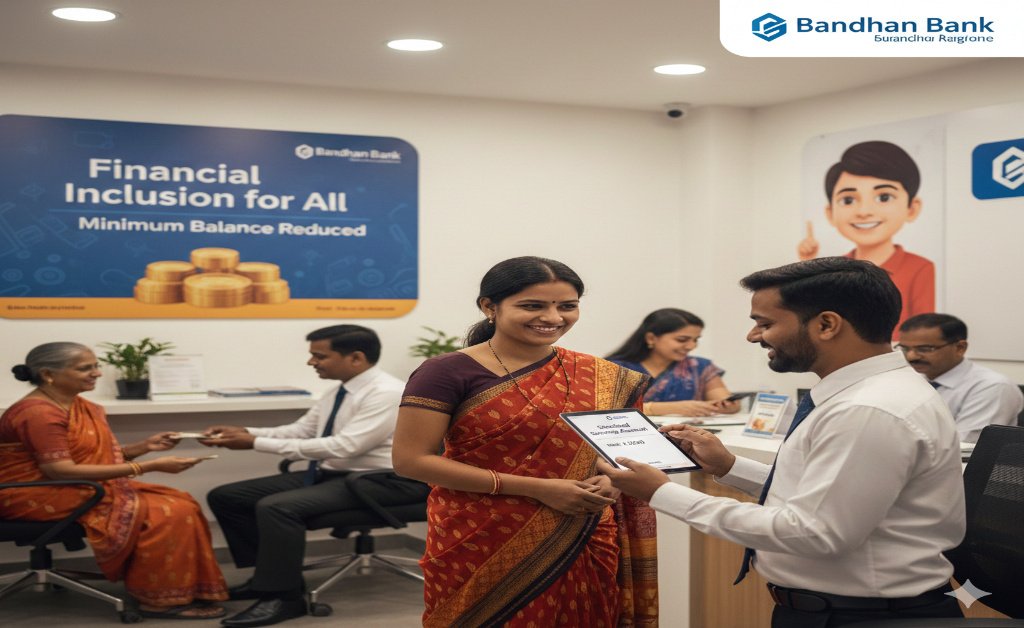
Strengthening Retail Liability Franchise
The policy change is projected to reinforce Bandhan Bank’s retail deposit base by focusing on a larger section of the mass market. It intends to improve its CASA ratio vis-a-vis those competitors who are perceived as demanding higher minimum balances and therefore less “customer-friendly.” Market analysts see this move as an attempt by the bank to strengthen its position at the rural and semi-urban levels, where people are usually very sensitive about minimum balances. This will then lead to a more dependable and detailed liability profile.